Building Scalable Content Operations With DAM
Content teams at growing organizations often hit the same invisible wall. Assets are scattered across shared drives, email threads, and personal folders. Approvals take days. Brand guidelines get ignored because nobody can find the right files. What starts as a manageable challenge quietly becomes a structural problem that limits how fast a business can actually grow. Building scalable content operations requires more than hiring more people or buying more storage; it demands a smarter approach to how digital assets are organized, accessed, and distributed across the entire organization.
A well-implemented digital asset management strategy addresses this at the root. Rather than patching individual pain points, a DAM system creates a unified operational foundation that grows with the business. This article explores how enterprise organizations can build content operations that scale, covering workflows, governance, team collaboration, and how to measure what’s actually working.
The Content Bottlenecks That Stall Growth
Scaling content operations is less often a creativity problem and more often a logistics problem. When teams spend significant time hunting for files, recreating assets that already exist, or waiting on approvals that get lost in inboxes, output slows and costs rise without any corresponding increase in quality.
The most common bottlenecks tend to cluster around a few familiar patterns. Assets live in too many places, so team members default to creating new files rather than reusing existing ones. Version control is inconsistent, meaning outdated materials regularly make it into campaigns. Access permissions are either too restrictive or too open, creating either friction or risk. And without a clear taxonomy or tagging structure, even well-organized libraries become difficult to search at scale.
- Duplicated effort from poor asset discoverability
- Slow review and approval cycles that delay campaigns
- Inconsistent file naming conventions across departments
- No single source of truth for approved, current assets
- Manual distribution processes that don’t scale with volume
Recognizing these bottlenecks as systemic rather than individual failures is the first step. The solution isn’t faster people; it’s smarter infrastructure.
How DAM Centralizes Assets for Team-Wide Efficiency
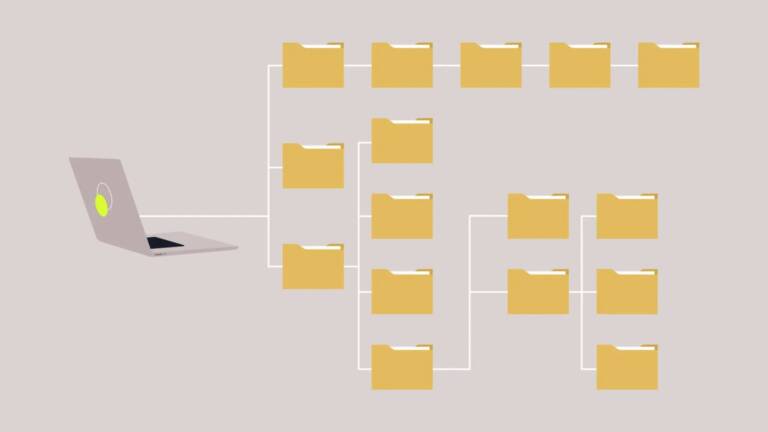
A DAM platform resolves fragmentation by creating a single, structured environment where every digital asset lives, is searchable, and is accessible to the right people at the right time. Instead of chasing files across tools and inboxes, teams work from one shared source of truth.
Centralization does more than tidy up storage. It fundamentally changes how teams interact with content. When an asset is uploaded once, tagged accurately, and stored in a logical hierarchy, every downstream user, whether a designer in the same office or a regional marketing manager in another country, can find and use it without needing to ask anyone for help.
Smart Tagging and Search
Effective centralization depends on discoverability. AI-powered tagging systems automatically apply relevant metadata to assets as they are uploaded, reducing the manual effort required to maintain a usable library. Teams can search by content type, campaign, date, usage rights, or custom attributes specific to their workflow. The result is a library that gets more useful as it grows, rather than more overwhelming.
Controlled Access and Permissions
Centralization also enables granular access control. Different user groups, internal teams, external agencies, media partners, can be given exactly the level of access they need. This eliminates the security risks of open shared drives while removing the friction of manually gating every request. Content reaches the people who need it, without unnecessary delays or exposure.
Automating Content Workflows at Scale
Manual processes are the enemy of scale. When every asset approval, format conversion, or distribution step requires human intervention, the system can only move as fast as the slowest person in the chain. Automation removes that constraint.
Modern DAM systems support workflow automation at multiple stages of the content lifecycle. Approval routing can be triggered automatically when an asset is uploaded, notifying the right reviewers and tracking status without anyone needing to send a follow-up email. Format conversion can happen in the background, producing web-optimized, print-ready, and social-ready versions of an asset simultaneously. Distribution to connected platforms can be scheduled or triggered by workflow events rather than managed manually.
For large organizations handling hundreds or thousands of assets per month, these automations compound. Time saved on each individual task adds up to a meaningful reduction in operational overhead, and a faster path from content creation to content deployment. Teams can redirect that recovered time toward higher-value creative and strategic work.
Keeping Brand Consistency Across Distributed Teams
Brand consistency is one of the most significant operational challenges for organizations with multiple offices, markets, or external partners. When different teams pull assets from different sources, outdated logos, incorrect color treatments, and off-brand messaging inevitably appear in market-facing materials.
A DAM system addresses this structurally. By housing all approved brand assets, logos, templates, imagery, guidelines, and campaign materials, in a single governed environment, the platform ensures that every team, regardless of location, is working from the same approved library. Outdated assets can be archived or flagged, and new approvals can be pushed to the relevant users automatically.
This is particularly valuable for organizations that work with agencies and external partners. Rather than emailing asset packages and hoping the right version gets used, teams can provide controlled access to a curated section of the DAM platform. Media contacts, agencies, and partners find what they need independently, and the organization retains full visibility and control over what is being accessed and shared. Our approach at ImageBank X supports exactly this kind of structured external collaboration, giving brand and communications teams confidence that their materials are being used correctly across every channel. If you would like to see it in action, try ImageBank X free for 30 days and explore the platform for yourself.
Measuring the Operational Impact of Your DAM System
Implementing a DAM platform is an investment, and like any investment, it should be measurable. The operational impact of a well-configured DAM system shows up across several dimensions, some immediately visible, others more gradual.
The most direct metrics to track include asset retrieval time, approval cycle duration, content reuse rates, and the volume of duplicate assets being created. A reduction in retrieval time signals that the taxonomy and tagging structure is working. Shorter approval cycles indicate that workflow automation is removing friction. Higher reuse rates show that teams are finding and leveraging existing assets rather than recreating them from scratch.
- Time-to-publish for campaign assets
- Number of assets created versus assets reused
- Volume of support requests related to file access or version confusion
- Storage costs relative to the size of the active asset library
- User adoption rates across departments and external partners
Beyond these operational indicators, there is a broader strategic value that is harder to quantify but equally real: the confidence that comes from knowing your brand is being represented consistently, your teams are working efficiently, and your content infrastructure can absorb growth without breaking down. As content demands continue to increase through 2026 and beyond, organizations that have invested in a scalable asset management strategy will be better positioned to move quickly, maintain quality, and keep their teams focused on work that actually moves the business forward. Ready to talk through your own content operations? Get in touch with our team and we will help you plan the next step.