The future of marketing workflows: Less manual work, more automation
Test your content management health!
Where marketing teams lose 8 hours a week (and how to get them back)
Why content organization matters: 4 tips for effective content organization
Marketing teams today run on an ever-growing stack of tools. Design files live in one place, approved assets in another, product images somewhere else. Before a campaign goes live, someone has to manually pull everything together, resize it, rename it, upload it to five different places, and hope nobody used last quarter’s version. This is not a content problem. It’s a workflow problem.
The answer to this pickle isn’t more tools. It’s a smarter system that connects the ones you already rely on and automates the steps that eat your team’s time. A modern Digital Asset Management platform like ImageBank X is built exactly for this: it covers the full digital asset lifecycle, from creation all the way to distribution, and keeps everything in sync without the extra manual effort.
Let’s walk through what that smart digital asset lifecycle actually looks like in practice.
Stage one: Creating without switching tabs
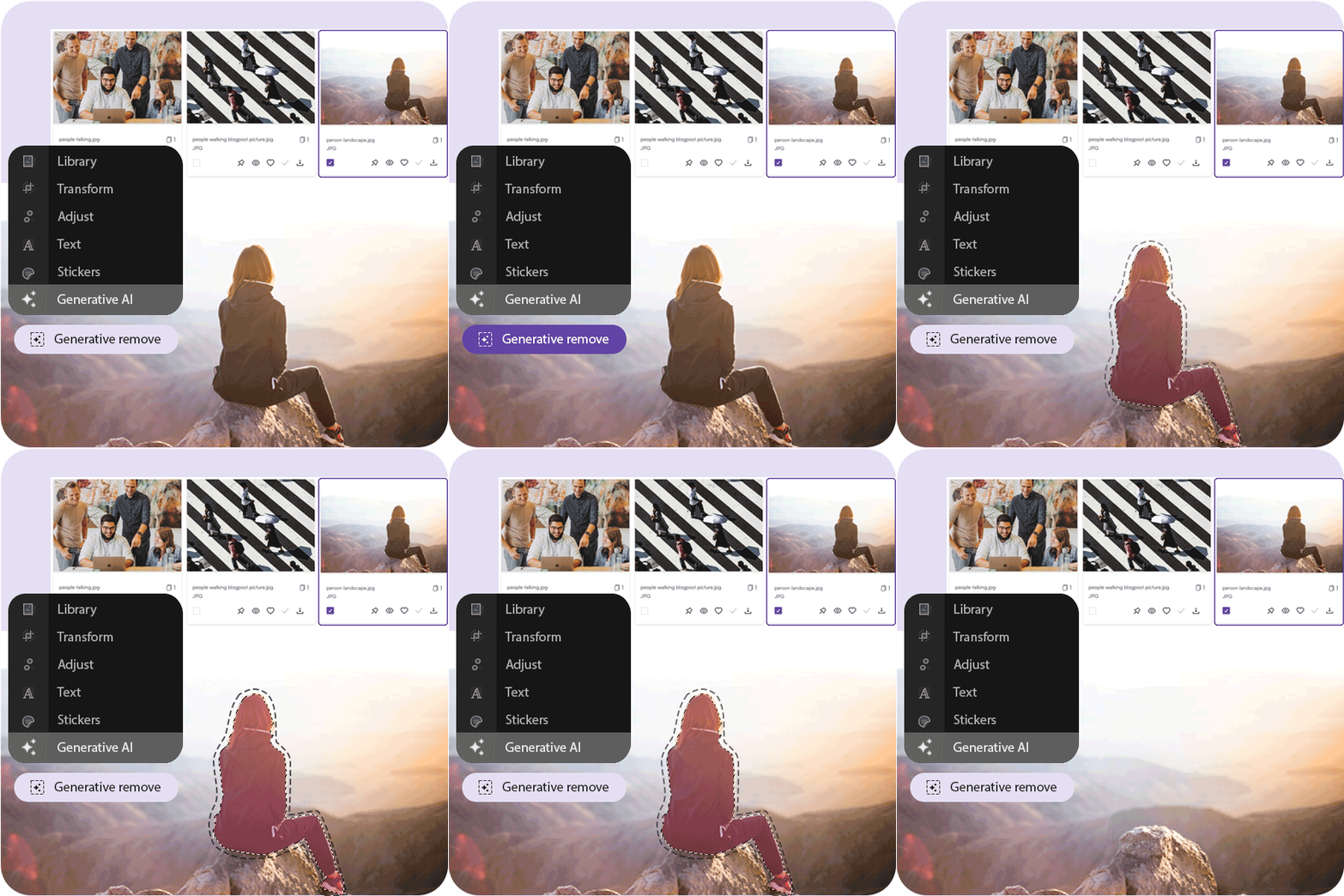
In today’s fast-moving digital world, content is consumed faster than ever. Modern marketing teams cannot afford to wait days for simple asset updates, channel adaptations, or content requests.
A modern DAM system like ImageBank X combines content creation, editing tools, and AI capabilities in one platform, allowing teams to create, adapt, and prepare assets for different channels without unnecessary steps. Crop images, generate variations, resize content, and make quick updates directly within the platform. Everything stays organized and accessible from the very first brand save.
And for designers who live in Figma, Adobe Creative Cloud, or Canva, that’s fine too. ImageBank X connects to the tools your team already uses. Assets created in your preferred design environment flow directly into the DAM, instantly available to the rest of the team. No manual transfers, no emailing files, and no more “can you send me the latest version?” messages.
The result: designers work in the tools they know best, while the wider team can create and adapt brand safe assets independently. No more waiting. Faster campaign production.
Stage two: Organizing, enriched by AI

Every DAM tool promises searchability. The difference is how much work it takes to get there. In most systems, someone has to manually tag every asset, write descriptions, assign metadata. That work usually gets skipped, which means assets stay buried and teams keep hunting for the right version.
ImageBank X uses AI to generate metadata automatically. When an asset lands in the DAM, you can generate with AI relevant tags and, critically, alt text.
This might sound like a small detail, but it has three significant knock-on effects:
Findability: Rich metadata makes search actually work. Teams find the right asset in seconds instead of browsing through folders or asking a colleague to send it again.
SEO and accessibility: Alt text generated in the DAM travels with the asset when it’s published to a website or digital channel. This means better search engine performance and compliance with accessibility standards, without anyone on the team having to write the descriptions manually.
Brand control: With everything in one organized place and easy to find, teams stop using outdated files. The right version is always the obvious choice. Old logos, discontinued product shots, off-brand visuals, they simply don’t circulate anymore.
“The best asset management system is the one people actually use. That happens when finding the right file takes less time than asking a colleague.”
Stage three: Distributing to every channel automatically
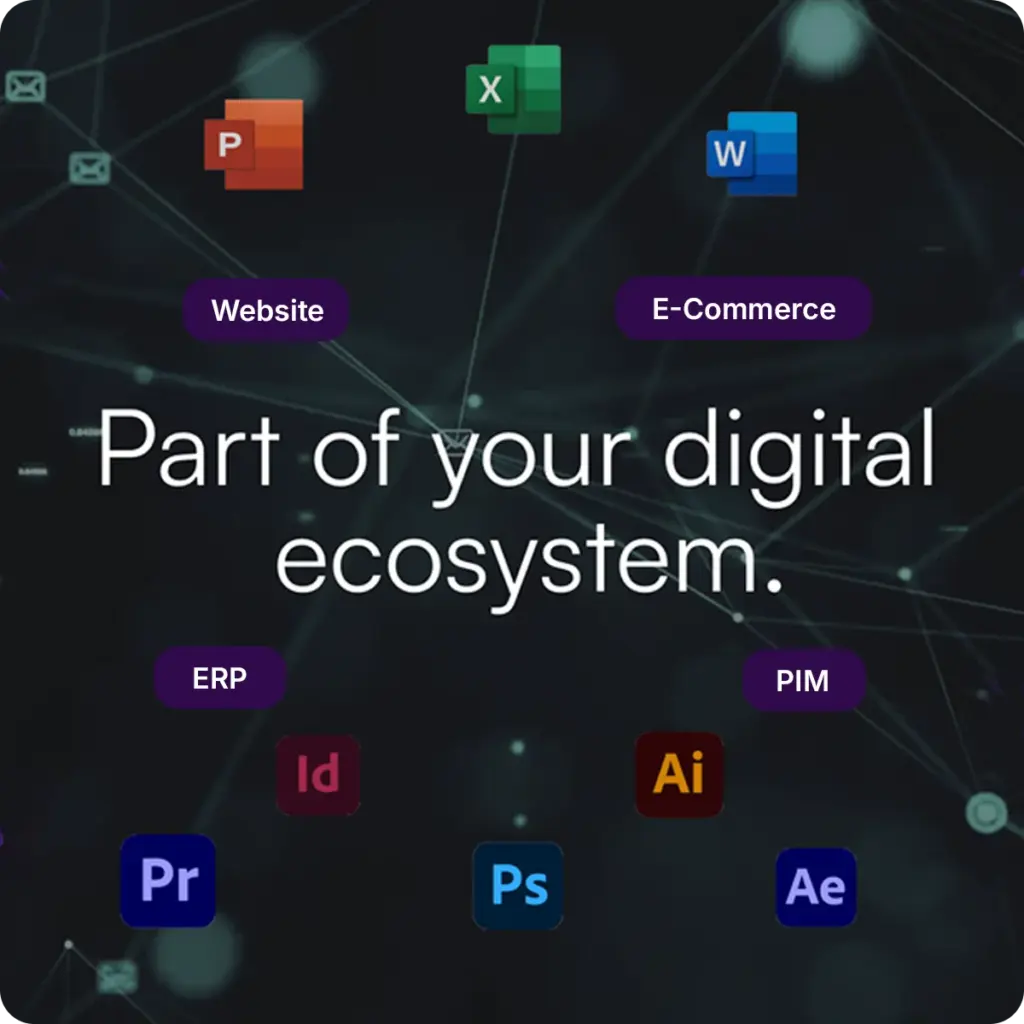
This is where modern DAMs create the most visible operational change. Traditionally, publishing an asset means downloading it, reformatting it, logging into each platform, uploading it, checking it renders correctly. Multiply that by every channel, every campaign, every market variant, and the manual effort becomes enormous.
With ImageBank X, distribution is built into the system. Assets flow from the DAM to the channels that need them, automatically.
Websites stay current without manual uploads
When an asset is updated or approved in ImageBank X, it can be pushed automatically to connected web platforms. Teams using for example WordPress, Drupal or Sanity can have their media libraries stay in sync with the DAM. No more re-uploading hero images or hunting for the correct logo file from seperate system.
Product imagery, always accurate
For retail and product-driven businesses, keeping product images accurate across a webshop is a constant challenge. ImageBank X integrates with e-commerce platforms like Shopify, so when product photography is updated or approved, the right images go to the right products. No more outdated product shots, no more manual exports.
Catalogs and product data, synchronized
Organizations using a Product Information Management system get an additional layer of automation. When ImageBank X is connected to a PIM, product images are matched and attached to product records automatically. Catalogs, datasheets and sales materials can be generated with the correct, up-to-date imagery without anyone touching each file manually.
Distributors get the right materials, every time
For businesses that work with resellers, dealers or franchise networks, keeping partners stocked with current brand materials is a constant operational headache. ImageBank X enables dedicated portals where partners always see approved, current assets. When something is updated centrally, the update travels automatically. Old materials simply stop being available.
What this actually frees up?
When assets flow from creation to organization to distribution automatically, marketing teams reclaim time on tasks that look small individually but add up to real hours each week: searching for files, re-exporting to the right format, sending materials to partners, updating webshop images, chasing designers for the latest version.
More meaningfully, it reduces the risk of error. The wrong version of a product image or an off-brand visual in a dealer portal is not just a minor inconsistency; it reflects on how the brand presents itself across every touchpoint. A system where assets move automatically from a single approved source removes that risk by design.
And for teams trying to move faster, fewer manual handoffs mean shorter time-to-market. A campaign that previously required several rounds of file management can be ready to publish the moment assets are approved.
The shift from “a place to store files” to “a system that keeps everything in motion” is what separates a modern DAM from a shared drive with a better interface. That’s the version of asset management worth investing in.
Marketing teams don’t need more tools. They need the tools they have to work together, with less friction, fewer manual steps, and one clear place where everything is current, correct and ready to use.
That’s the promise of a well-integrated DAM. And it’s exactly what ImageBank X delivers.
Ready to simplify your marketing workflows?
Discover how ImageBank X can connect content creation, asset management, and distribution into one streamlined workflow.